How to Water Your Lawn Correctly: Depth, Timing, and the One-Inch Rule
Most lawns are watered daily, shallowly, and at the wrong time. Here is the deep-and-infrequent method that produces deeper roots and a lower water bill.
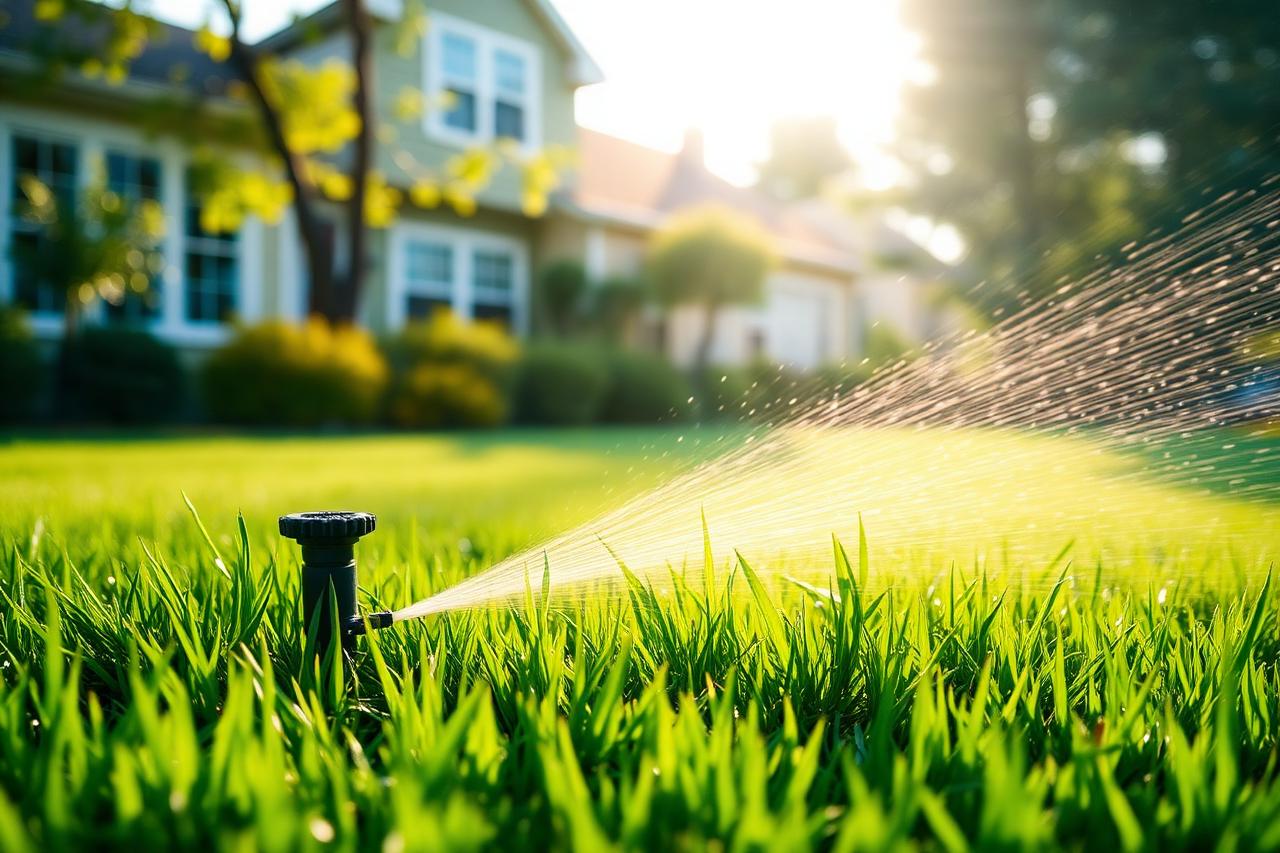
Watering is the lawn task homeowners do most often and get wrong most often. The typical suburban routine — a light sprinkle every evening — produces exactly the lawn you would expect: shallow roots living in the top inch of soil, dependent on the next watering, and the first thing to brown when a July heat wave arrives.
The fix costs nothing. Water deeply, water infrequently, water early, and measure once so you know what your system actually delivers. Homeowners who make that switch usually see a greener lawn on 20 to 30 percent less water within a single season.
How Much Water a Lawn Actually Needs
The working number across most of the country is one to one and a half inches of water per week, including rainfall, delivered in one or two sessions rather than daily sprinkles. That is enough to wet the soil six inches down, which is where you want roots living.
Grass type and region shift the number. Cool-season grasses — Kentucky bluegrass, fescue, ryegrass — need the full inch and a half during summer heat and much less in spring and fall. Warm-season grasses like bermuda, zoysia, and St. Augustine are more drought-efficient and often thrive on three-quarters of an inch.
| Grass type | Spring | Summer peak | Fall |
|---|---|---|---|
| Kentucky bluegrass | 1 in. | 1.5–2 in. | 1 in. |
| Tall fescue | 0.75 in. | 1.25–1.5 in. | 0.75 in. |
| Perennial ryegrass | 1 in. | 1.5 in. | 1 in. |
| Bermuda | 0.5 in. | 1–1.25 in. | 0.5 in. |
| Zoysia | 0.5 in. | 0.75–1 in. | 0.5 in. |
| St. Augustine | 0.75 in. | 1–1.5 in. | 0.75 in. |
The Tuna-Can Test: Measure Once, Water Right Forever
Nobody knows how much water their sprinklers put down until they measure, and output varies enormously between systems. The test takes 20 minutes and only needs a few empty cans.
Place five or six straight-sided cans — tuna or cat food cans are almost exactly one inch tall — around the zone, some near the sprinkler and some at the far edge. Run the zone for 20 minutes, then measure the depth in each can with a ruler. Average them, and you have your output rate. If the average is a quarter inch in 20 minutes, your system delivers three-quarters of an inch per hour, and a one-inch week means about 80 minutes of run time split across two days.
The cans also reveal coverage problems. If the far can holds half what the near can does, you have a head spacing or pressure issue that no run-time adjustment will fix.
The Best Time of Day — and the Worst
Water between 4 and 9 a.m. Early morning has the lowest evaporation loss, the least wind drift, and it lets the blades dry as the sun comes up, which starves the fungal diseases that thrive on wet grass.
Evening watering is the common mistake. It leaves the canopy damp all night, and in humid summers that is a direct invitation to brown patch and dollar spot. Midday watering is not harmful to the grass — the myth about droplets scorching blades is not real — but it wastes 20 to 40 percent of the water to evaporation in hot, dry conditions.
- Best: 4–9 a.m., before the wind picks up
- Acceptable: late afternoon before 4 p.m., with time to dry
- Avoid: after dark, and anything above 90°F with wind
Dealing With Runoff, Clay, and Slopes
Heavy clay and compacted soil absorb water slower than a sprinkler applies it, so a long single run just sends water down the driveway. Use cycle-and-soak: run each zone for 10 minutes, wait 30 minutes, then run again, repeating until you have applied the full amount. Most modern controllers can do this automatically.
Slopes need the same treatment with shorter cycles. If you see water crossing a sidewalk before the run is over, cut the cycle length in half and add a cycle. Core aeration once a year, described in our overseeding guide, permanently improves how much water compacted soil can take.
Cutting the Water Bill Without Losing the Lawn
Watering deeply and infrequently is itself the largest saving available, but a few upgrades compound it. A $30 rain sensor prevents the sprinklers from running after a storm. Switching spray heads to high-efficiency rotary nozzles cuts application rate to a level clay soil can absorb, reducing runoff. Raising your mowing height by half an inch shades the soil and measurably slows drying.
In water-restricted regions, letting cool-season grass go dormant in midsummer is a legitimate strategy: it turns tan, stays alive on a half inch every two to three weeks, and greens up when temperatures fall. Homeowners replacing turf entirely should read our guide to HOA-approved front yard upgrades, which covers the approval process and payback math.
Frequently Asked Questions
How long should I run my sprinklers?
There is no universal number — it depends entirely on your system's output. Run the tuna-can test once, then set the run time to deliver about half an inch per session, twice a week. For most systems that lands between 25 and 40 minutes per zone.
Is it better to water every day or twice a week?
Twice a week, deeply. Daily light watering keeps moisture in the top inch, so roots never grow deeper and the lawn becomes fragile in heat. Deep, infrequent watering drives roots six inches down.
Should I water a new lawn differently?
Yes. New seed and fresh sod are the exception to deep-and-infrequent: keep the top inch consistently moist with light watering two or three times a day until seedlings establish or sod knits down, then taper to the normal schedule over three weeks.
How do I know if I am overwatering?
Look for spongy ground underfoot, mushrooms, increasing weed pressure from crabgrass and nutsedge, and a lawn that yellows despite fertilizer. A screwdriver that pushes into the soil with no resistance a day after watering is another sign.
Does rainfall count toward the weekly inch?
Absolutely. Put a rain gauge in the yard and subtract what the sky delivers. A $10 gauge and a $30 rain sensor together prevent most of the wasted water in a typical irrigation season.
Can I water in the middle of a heat wave?
Yes, and you may need an extra session, but keep it in the early morning and increase depth rather than frequency. A brief syringe cycle at midday to cool the canopy is a golf-course practice that rarely helps home lawns.
Conclusion
Correct lawn watering comes down to four habits: know your system's output, apply about an inch a week in one or two deep sessions, do it before 9 a.m., and use cycle-and-soak if water runs off. That combination produces deeper roots, better drought tolerance, less disease, and a smaller bill than daily sprinkling ever will. Pair it with the timing in our spring lawn care checklist and the full Lawn Care collection for a season-long plan.
About the author
Contributor
David has over a decade of experience in residential yard maintenance and garden planning. He specializes in low-maintenance planting plans that add lasting value.
More from David NguyenPublished · Updated
Related articles
Spring Lawn Care Checklist for a Healthy Yard
The eight-step spring lawn care routine that produces a thick, green, weed-free yard by early summer.
How to Overseed Your Lawn in Fall for a Thicker, Greener Yard
Fall is the best time to overseed a cool-season lawn. Follow this sequence and thin spots fill in, weeds get crowded out, and next spring's yard looks brand new.

7 HOA-Approved Front Yard Upgrades That Cut Your Summer Water Bill in Half
You can cut a summer irrigation bill roughly in half without a single violation letter. Here are the seven upgrades that satisfy architectural review committees, what each one costs, and how much water it actually saves.
Fresh home & garden ideas, every Sunday.
Join American homeowners getting practical, research-informed advice on gardening, landscaping, and DIY. Free, no spam, unsubscribe anytime.