How to Encourage Your Orchid to Bloom Again: A Practical Care Guide
Orchids don't rebloom by accident—they respond to precise environmental triggers. Learn the light and temperature shifts needed to push out brand-new spikes on Phalaenopsis.
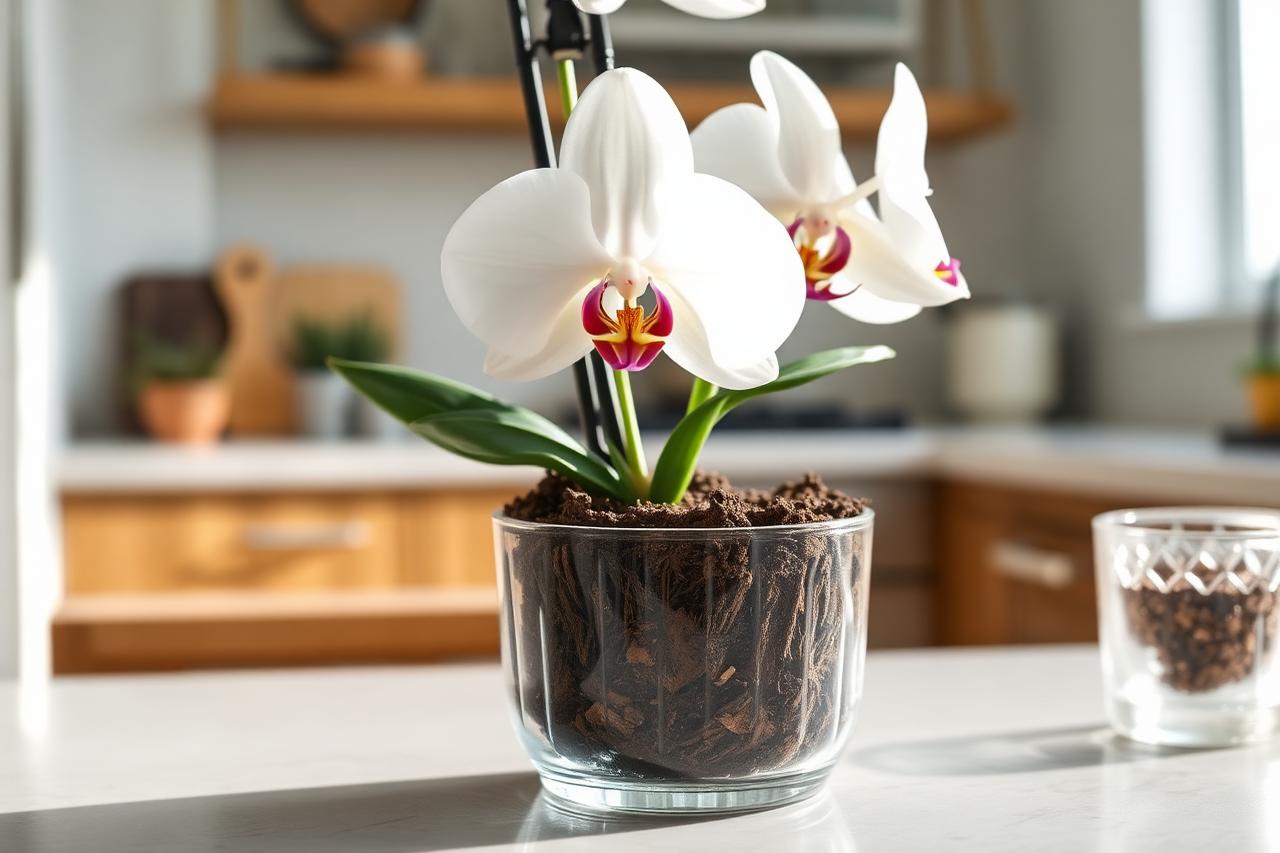
A grocery store Phalaenopsis often stops flowering after its first spike and puts out leaves instead. That is usually not a sign of a sick plant. It normally means the orchid is not getting the conditions that trigger a new spike.
The two absolute master switches are optimal light and temperature. A happy Phalaenopsis requires bright, indirect light (its leaves should sport the vibrant color of a Granny Smith apple) alongside a steady nighttime temperature drop of roughly 10–15°F maintained for three to four weeks to safely initiate a fresh flower spike. American Orchid Society: How to Rebloom Your Orchid
Step 1: Confirm the Plant Is Actually Ready
A stressed plant cannot manufacture flowers out of an energy deficit. Before chasing environmental triggers, ensure your orchid has enough stored reserves: look for at least three or four firm, leathery green leaves and healthy root systems that look plump and silvery-green when dry, turning a rich emerald green just minutes after a good soak.
Limp, wrinkled leaves indicate a failing root system rather than a lighting problem—and no temperature trick in the world will force a spike until the roots bounce back. Mushy, dark brown roots mean the plant stayed waterlogged too long and urgently needs repotting into fresh bark. Always give a recovering orchid a full growing season to rebuild its strength before expecting blooms.
- Ready to bloom: 3+ firm leaves, plump silvery-green roots, and at least one robust new leaf grown over the past year
- Not ready: severely wrinkled leaves, black or hollow roots, and zero new growth over the past 12 months
- Too young: a tiny single-leaf seedling or a young propagation division separated within the past six months
Step 2: Fix the Light — the Most Common Culprit
Phalaenopsis orchids are frequently marketed as low-light houseplants, but that's a common oversimplification. They can survive in dim corners, but they only bloom when bathed in bright, indirect light. If your orchid's leaves are a deep, glossy forest green, it's cozy but severely under-lit. Actively blooming plants feature leaves resembling a ripe green olive—slightly lighter with a subtle yellowish hue.
In most homes an east-facing window with direct morning sun is the easiest spot. South- and west-facing windows work behind a sheer white curtain. North-facing windows rarely give enough light for flowering without a grow light. Move a plant to a brighter spot gradually over about two weeks to avoid leaf scorch.
Step 3: Keep Conditions Stable as Nights Cool
Cooler nighttime conditions can encourage a mature, healthy Phalaenopsis to form a flower spike, but the response varies by plant, hybrid, and growing conditions. A moderate difference between daytime and nighttime temperatures may occur naturally indoors as the seasons change; it should not be treated as a guarantee of flowering. American Orchid Society: Orchid Care Basics
Keep the orchid in a stable spot with bright, indirect light, and protect it from excessive cold, wind, drafts, and sudden temperature changes. Watch the base of the leaves for new growth: a developing flower spike often has a flatter, mitten-like tip, while a new root usually has a smoother, rounded tip. Their appearance can vary, so allow the growth to develop before deciding which it is.
| Genus | Day temp | Night temp | Trigger duration |
|---|---|---|---|
| Phalaenopsis | 72–80°F | 55–65°F | 2–4 weeks |
| Cattleya | 70–85°F | 58–65°F | 3–5 weeks, plus day length |
| Dendrobium (nobile) | 65–75°F | 50–58°F | 6–8 weeks, dry rest |
| Oncidium | 70–80°F | 55–62°F | 3–4 weeks |
Step 4: Feed for Flowers, Not Foliage
A Phalaenopsis needs nutrients to grow and to flower, and the loose bark it usually sits in holds very little of them. Feeding is really about giving back what the bark cannot supply, especially while the plant is actively putting out new leaves and roots. It helps a healthy plant along, but there is no phosphorus-rich formula that guarantees a new spike, so you do not need a special 'bloom booster' to get flowers.
Use a fertilizer made for orchids and follow the dilution and frequency printed on the label. A balanced product is fine as long as its composition suits orchids; there is no need to switch automatically to a high-phosphorus mix. How often you feed depends on the specific product, your potting medium, the time of year, and how much the plant is growing, so treat the label as your guide rather than following a fixed 'every second watering' rule.
Water the plant whenever it actually needs it, and let the excess drain away fully instead of leaving it to sit. Every so often, run plain water through the pot to rinse out mineral salts that can build up on the bark and irritate the roots. And go easy on a plant that is struggling: if it is very weak, has damaged roots, or was recently repotted, hold off on feeding until it has recovered.
Step 5: Cut the Old Flower Spike Correctly
Once the last flower fades, look at the old flower spike before you cut anything. A spike that is still firm and green may keep going: some plants push out a side branch or a few more flowers from a node farther down the stem. This does not happen on every plant, so treat it as a possibility rather than something you can count on. If you want to give it a chance, leave the green spike in place, or trim it back to just above a visible node and see what the plant does over the following weeks.
A spike that has turned yellow, brown, or dry and woody is finished and will not flower again. Cut it back to the base with a clean, sterilized blade or pair of snips. There is no need to leave a dead stem attached, and removing it keeps the plant tidy. To sterilize a tool, wipe the blade with isopropyl (rubbing) alcohol and let it dry, which lowers the risk of spreading disease between plants. Flaming a blade is not necessary here and can be a burn hazard, so the alcohol wipe is the simpler, safer choice.
What the Reblooming Timeline Looks Like
Once a new spike appears, it usually takes a couple of months to grow out and open, but the exact time varies with the individual plant, your growing conditions, and the season. Some plants move quickly; others take their time, and cooler or darker stretches tend to slow things down. Rather than expecting flowers by a set date, watch the spike itself and let it set the pace. Phalaenopsis flowers often last for weeks to a few months once they open.
As the spike lengthens, stake it loosely with a soft clip once it clears roughly six inches so it grows upright and is easier to support later. Try to keep the plant in a stable spot while buds are forming, since sudden changes in light, temperature, or drafts can stress it. Turning the pot is not harmful in itself, but buds orient toward the light, so avoid rotating it repeatedly during spike and bud development if you want the flowers to face one way.
Repot when the potting mix and roots tell you to, not on a fixed calendar. If the bark has broken down into a dense, soggy mass, or roots are crowded and pushing out of the pot, it is time for fresh medium. In good condition, a mix can last well over a year; check it each time you water rather than repotting by the clock. Try not to repot while a spike is actively developing unless the roots are clearly failing.
Water when the plant needs it rather than on a strict schedule. Root color can be a hint, but it is not a reliable rule on its own, since bark that looks dry on top can still hold moisture below. Feel the medium, judge its weight, and water thoroughly when it is approaching dry, letting the excess drain away. Every so often, glance at the undersides of the leaves for pests such as scale or mealybugs, and deal with anything you find early.
Sources & References
• American Orchid Society: Phalaenopsis Orchid Care Guide
• UMN Extension: Orchid Care for Beginners
Frequently Asked Questions
How long after buying an orchid should it bloom again?
There is no fixed answer. A plant from the store has usually put a lot of energy into the flowers it arrived with, so give it time to grow new leaves and build up its roots before it can flower again. For many plants that means the better part of a year, but it depends on the plant's health and your conditions. If it is growing new leaves and firm roots, it is on track even if there is no spike yet.
Is this new growth a flower spike or a root?
They can look similar at first, so give it a few days. A root tends to have a smooth, rounded tip and usually appears near the base, often heading down or out toward the pot. A flower spike usually emerges from between the leaves higher up and has a flatter, mitten-like tip. If you are not sure, just leave it alone and let it develop; the shape becomes clearer as it grows.
Should I use ice cubes to water my orchid?
It is better to skip the ice. Phalaenopsis are tropical plants, and very cold water can stress the roots. Watering with room-temperature water, run through the bark at the sink until it drains freely, does a better job of soaking the roots and rinsing the medium. The ice-cube method is mostly about convenience rather than what the plant prefers.
My orchid produced a flower spike, but all the buds dropped before opening. Why?
Buds dropping before they open is usually a sign of stress rather than disease, and it is common. A cold draft or a warm heater vent nearby, the medium drying out completely, a sudden move to different light, or ethylene from ripening fruit sitting close by can all trigger it. Once a spike sets buds, try to keep the plant's surroundings as steady as you can. If the plant is otherwise firm and green, it can spike again later.
Do I need to repot my orchid before it blooms again?
Not automatically. Repot based on the condition of the mix and roots, not to force flowering. If the bark has broken down into a dense, soggy mass, or the roots are crowded and unhealthy, fresh medium helps the plant overall. If the mix still drains well and the roots look firm, you can leave it and let it bloom in its current pot. It is usually best not to repot while a spike is actively developing unless the roots are clearly in trouble.
Can an orchid bloom again from the same flower spike more than once?
Sometimes. A firm, green spike can branch and produce more flowers from a lower node, and a healthy plant may do this once or twice before the spike eventually yellows and dries. It does not happen on every plant, and there is nothing wrong with a plant that puts up a fresh spike instead. Once a spike turns brown and dry, it is done, and you can cut it back to the base.
Conclusion
There is no single sequence that guarantees flowers, but a few things matter most: keep the roots healthy, give the plant bright, indirect light, watch its temperature and protect it from sudden changes, water when the medium is approaching dry, and feed lightly with a fertilizer made for orchids. Handle the old flower spike based on its condition rather than a rule. Timing varies from plant to plant, and some need extra time to recover or grow before they bloom, so give yours room to do that. If a full year passes with no spike, look at your light levels first, since too little light is the most common reason a healthy plant skips flowering.
About the author
Editorial Contributor
Sarah writes the gardening and houseplant guides here — seasonal tasks, soil and watering, planting ideas, and the ordinary problems that come up between spring and frost.
More from Sarah MitchellPublished · Updated
Related articles

Best Indoor Plants for Low-Light Rooms: What Actually Survives
Twelve houseplants that hold up in dark apartments, north-facing windowsills, and shaded corners.
Summer Garden Maintenance Checklist: What to Do in June, July, and August
A pragmatic summer garden guide focused on adjusting watering, applying mulch correctly, monitoring pests, and transitioning toward fall crops.
Fresh home & garden ideas, every Sunday.
Join American homeowners getting practical home & garden advice on gardening, landscaping, and DIY. Free, no spam, unsubscribe anytime.